
How to choose and follow a diet for your health with DietaGo
When your doctor tells you to watch what you eat because of your bowel, liver or stomach, the hard part is turning that advice into everyday meals. This guide explains how to use DietaGo's “Diets for your health” to know what to eat, what to avoid and have a menu for the week, and when you should ask a professional.
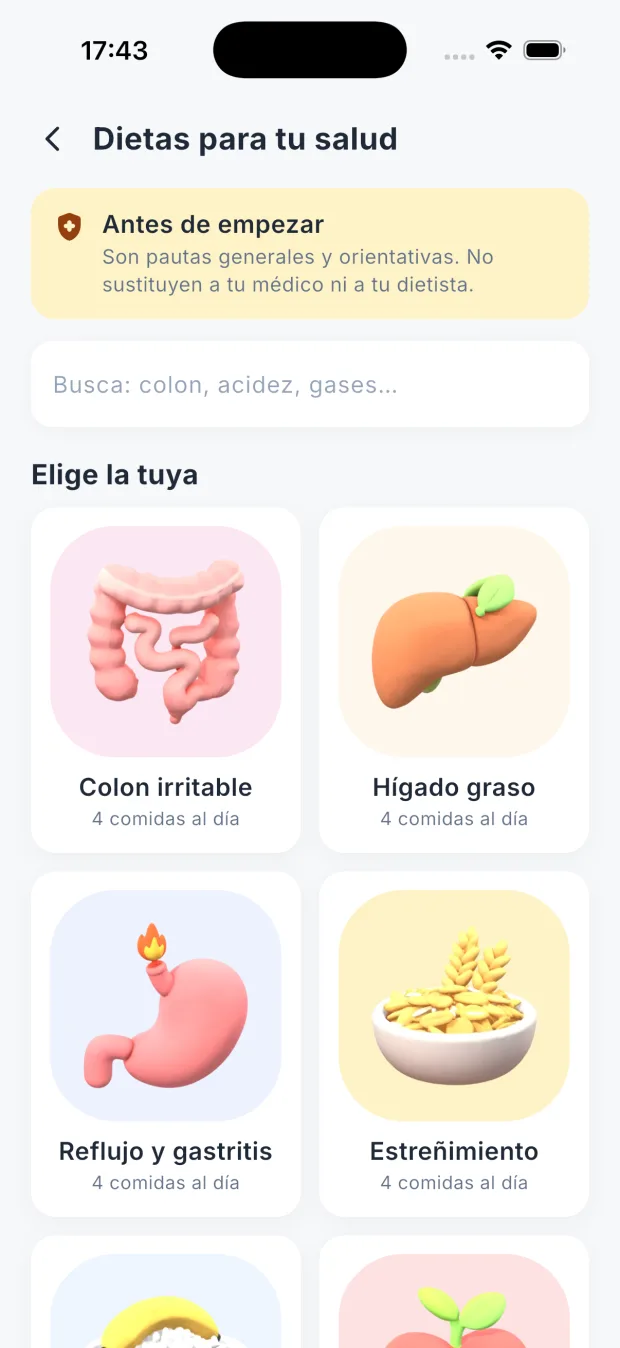
1. Choose the diet that matches
Open “Diets for your health” from the side menu or from Diet templates. You'll see six figures: irritable bowel, fatty liver, reflux and gastritis, constipation, bland diet, and cholesterol and blood pressure.
If you don't know which one is yours, type what you notice into the search box: “gas”, “heartburn”, “diarrhea” or “high blood pressure”. The search also understands the name of the condition.
2. Read the diet page before the menu
Each diet starts with a notice, who it's for, what to eat and what to avoid. It's worth reading before looking at the dishes: it explains why the menu includes some foods and not others.
At the end, under “Bear in mind”, you'll see how long to follow it (low FODMAP and the bland diet are temporary) and which signs mean you should see a doctor.
3. Adjust the calories
You can view the menu from 1400 to 2500 kcal a day. DietaGo marks the level closest to your daily goal and the servings are recalculated on their own: whole items (eggs, fruit, yogurts) stay whole and grams are rounded to kitchen-friendly figures.
If you're not sure which level you need, stick with the one the app suggests or ask your dietitian.
4. Move it to your week
With “Apply to my week” you choose which Monday to start from, and the meals go into your weekly plan as planned. Then you mark them as eaten, swap them or delete them like any other meal.
“Shopping list” gathers the ingredients for all seven days into one list you can save to your DietaGo lists.
5. Download it as a PDF
From the diet page, “Download as PDF” creates a document with the diet at your calories: what to eat, what to avoid, the menu with quantities and preparation, and what to bear in mind.
It's handy for sticking on the fridge, giving to whoever cooks at home or taking to your appointment to go over it with your doctor or dietitian.
6. When to ask a professional
These diets are general guidelines for adults, not a treatment. Check with a professional before starting if you have several conditions at once, take medication, are pregnant or breastfeeding, or if your symptoms get worse.
For kidney disease, a Crohn's or colitis flare-up, diverticulitis, diabetes treated with insulin or severe allergies, your diet needs to be drawn up by a professional: that's why DietaGo doesn't include them.
Try these features in DietaGo
No subscription. Everyday use is free; AI features use coins.